Monday, September 3, 2012

NHL Stars That Never Were

One of the most fun questions we can pose about pretty much any subject is "what if"? Yes, it can also be one the most torturous, but hey, this is fiveorama and we're all about fun here so...um, this will be one of the fun times.

Of course in the world of hockey, there are tons of "what ifs" that make for some interesting hypothesizing. Some of the more popular ones are "What if Eric Lindros hadn't been such a bitch and decided to play for the team that actually drafted him, the Quebec Nordiqes, instead of flat out refusing and forcing one of the biggest and most significant trades in NHL history?" "What if Bobby's knees had held up?" "What if Canada had LOST the 1972 Summit Series?" and, my personal favourite: "What if Kerry Fraser had actually called Gretzky for highsticking Gilmour in May of 1993?" Oh, that one still bounces around in my head on at least a monthly basis.

But I said we'd be sticking to actually fun examples, not horribly painful ones. Now I'll admit that these aren't 100% fun because for a few of them, there definitely is a degree of tragedy present. But from strictly a hockey standpoint at least, they are fun to think about (I promise). Also I'll be limiting my choices to players that never played a single game in the NHL. So guys like the great Soviet star from Latvia, Helmut Balderis, who made his NHL debut at the age of 37 (with the Minnesota North Stars) after a distinguished career oversees, won't count. Players such as Michel Briere and Luc Bourdon managed to play briefly in the league before their untimely deaths so they're out as well.

So here are some players who, for various reasons never got to play in hockey's greatest league but whom I really believe would have been stars there if they had.

5. George Pelawa RW
Yup. He was friggin' huge
Players drafted while playing American high school hockey are incredibly rare. After all, putting up dominating stats in a league that is far inferior to Canadian major junior, pro leagues in Europe or American university is rarely seen as that impressive. But there have been exceptions, perhaps most notably goaltender Tom Barrasso who was not only picked extremely high at fifth overall but jumped straight into the NHL and won the Calder Trophy as the league's top rookie. And Brian Lawton too of course.

But back to George. A huge physical specimen at 6'3, 245 pounds as an eighteen year old, he effortlessly broke highschool scoring records and was named Minnesota Mr. Hockey as the most outstanding highschool player in the state. Several past and present NHLers have held the title. Pelawa so impressed scouts with his blend of size and skill that the Calgary Flames made him their first pick in the 1986 draft, taking him at sixteenth overall.

He was committed to play the 86/87 season with the University of North Dakota. But shortly after moving into his dorm there in late August 1986, he was hit by a car and killed.

It's impossible to say for sure whether or not Pelawa would have lived up to his lofty draft position or even made the NHL but I imagine he would have. If he could have played in the league anytime from his drafting until about 1992 or so, he would have been the biggest player in the league's history up to that point (there had been taller players but none so heavy). 

Maybe he could have been Eric Lindros before Lindros (except he was winger rather than a centre, and like most wingers, more of a goalscorer than playmaker) -  a power forward of such size and strength that he'd been almost impossible for defenders to contain down low. Maybe he would have scored piles of goals the way Tim Kerr had - by being an immovable object in front of the net and banging in rebounds and tipping point shots. Only he was even bigger and far more physical in his playing style than Kerr ever was. I see his best years being seasons with more than forty goals and two hundred penalty minutes - a unique stat line for a unique kind of player.

We'll never know.


4. Alexei Cherapanov RW
He never got to play wearing that jersey
Another young man who died way before his time, Cherapanov was the latest in a long line of Russians with dizzying offensive skills. We can be a little more sure of his potential as an NHLer than of Pelawa's because he lived long enough to play pro hockey. In fact it was while playing hockey, in the KHL with Omsk Avangard - the team he'd played with as a seventeen year old when he was drafted by the New York Rangers at seventeenth overall in 2007, that he met his end. Late in a game on October 13, 2008, after completing a shift with teammate Jaromir Jagr (something of an NHL star, if you'll recall), the nineteen year old suddenly collapsed on the bench. He was briefly revived twice before dying two hours later in hospital. His death led to an extensive investigation and several people within the league were suspended indefinitely.

But as to what kind of NHL talent Cherapanov could have been, I would say pure goalscorer. This was the kid who broke Pavel Bure's record for goals by a seventeen year old in the Russian pro league. He also had more points than any of Evgeni Malkin, Alex Ovechkin and Ilya Kovalchuk did in their seventeen year old seasons in that league. Those are only three of the biggest stars to play in the NHL within the past fifteen years or so. Ovechkin and Kovalchuk both have multiple fifty goal seasons and Malkin, who has one, has led the league in scoring twice, finishing atop the heap again this year. So it's certainly reasonable to imagine that Cherapanov could have been just as good.

Although at 6'1, 183, he wasn't as physically imposing as any of those three. And like Bure, Ovechkin and Kovalchuk, he was more of a scorer than playmaker, collecting more goals than assists in his brief professional career. He was on just under a point a game pace as a nineteen year old.

And unlike other players on this list, I did actually see Cherapanov play. He was front and centre at the 2007 and 2008 World Junior Championships for Russia. He scored five goals in six games leading his team to the silver medal in 2007. He was selected to the tournament all star team and named top forward overall. In 2008, the Russians took bronze and Cherapanov had six points in six games.

Actually, he was seen by many as the most talented player in the entire 2007 draft class (which included number one pick and current NHL star, Patrick Kane by the way) and was only taken so late in the first round because many teams were unsure of his desire to actually play in the NHL. But the Rangers decided they couldn't pass him up.

The following year his World Junior teammate Nikita Filatov was the next Russian hotshot projected to be a star and taken in the first round. So far things haven't really worked out that way as he couldn't consistently stay in the Blue Jackets's lineup, bouncing between them and the AHL and playing the entire 09/10 season back in Russia. They eventually gave up on him and traded him to Ottawa where he couldn't seem to make an impact either and is currently back in the KHL, putting up modest stats.

I mention Filatov because I'm well aware that Cherapanov could have been a flop in the NHL too - you  can never tell with any young player and gifted Russians are very often enigmatic. Still, I don't think Filatov is of the same pedigree as Cherapanov and firmly believe that if he had lived, would have eventually made his way to the NHL and established himself there as a star.

3. Sven Tumba C
Was there anything this man could not do?
A legend of Swedish hockey, Sven Tumba had a chance to become the first European star in the NHL (I don't count the Slovakian-born, Canadian-raised Stan Mikita), but it wasn't to be. Consequently, most North American hockey fans have never even heard of him. But as I said, over in Europe, particularly his home country, this guy was a big deal. You're about to learn why.

Born with the extremely common Swedish last name Johansson, he would eventually legally change it to Tumba - the name of the small town he'd grown up in -  and by all accounts, he earned it. He played sixteen years - from 1950 through 1966 - with the Tre Konor, Sweden's national team, and established himself as their best player, eventually becoming captain. He won seven medals at the World Championships (three gold, a silver and three bronze), two Olympic medals (bronze in 1952 and silver in 1964) and retired having scored the most goals ever for Team Sweden with 186 in 245 games. Within the Swedish League he led his team to eight national championships. Yeah, the guy was a winner.

And it doesn't stop there. He was multi-sport athlete, playing soccer at the professional and international levels and was a pro golfer too. In fact, he's responsible for introducing golf to the Soviet Union. Oh, and he was also a Swedish water-skiing champion. Besides that he also hosted his own radio show called The Tumba Hour and founded multiple charitable organizations as well as inventing the Scandinavian Open and running his own hockey school. And who was it that actually invented the hockey helmet? It was SVEN FUCKING TUMBA.

So he was a great player on the international amateur scene, but was he good enough to have played in hockey's greatest league? Hell yeah. Tumba was actually the first European to ever attend an NHL training camp when he tried out for the Bruins in the late fifties. They offered him a $50 000 contract (quite a bit back then) to start with the Quebec Aces, who were the Bruins's farm team at the time, but he ultimately turned it down because playing pro in North America would have made him ineligible to play for his beloved Swedish national team.

But an interesting fact I dug up is that while he was there (1957) he did play a handful of games with the Aces who at the time had a twenty-one year old Willie O'Ree on the roster. If the name doesn't ring a bell, O'Ree was the first black player to ever play in the NHL, having played two games as callup for the Bruins that season and then forty-three games with them in the 60/61 season. I think that's pretty interesting and it's weird that I've never read about it anywhere.

Although he was a centre, Tumba was more of a goalscorer than playmaker and a signature move of his was taking the puck off the boards in the offensive zone and deftly cutting into the middle to unleash a wicked wrist shot. Actually, one thing he took home with him from his experience in North America was the slapshot - something that really wasn't being used over in Europe at that time. Reportedly he was so good at it that some folks called for it to be banned because I guess they thought it wasn't fair to the poor goalies. Well, we all know that eventually the slapshot did catch on across the sea and it seems only fitting that it was Sven Tumba who'd shown them the way.

Tumba passed away last year and the nation of Sweden mourned the loss of a hero, who many still feel was the greatest of their country to ever play the game. Considering some of the Swedish stars we're all aware of who play or have played in the NHL, that's high praise indeed. I really feel that in the late fifties and early sixties he could have been a star player for the Bruins, maybe even helping them to not completely suck as they did back then. We can dream.

2. Valeri Kharlamov LW
Our first taste of dazzling Russian skill
One of the rare players elected to the Hockey Hall of Fame never to have played in the NHL, there is really no doubt he would have been a star there. Other entries on this list can certainly be disagreed with but not this one. Kharlamov is pretty much a slam dunk.

I could have made all my picks Russian players who played and retired before the fall of the Iron Curtain. Hell, I could have made this list entirely out of Russians who played in the 1972 Summit Series that made Kharlamov so famous. But better to have some variety so I opted to just pick one. It was a no-brainer to go with #17 as he's probably the most electrifying non-NHL talent ever to be seen by North American fans.

He made an immediate impact too. In the infamous first game of that series in Montreal, wherein a team of NHL stars were shellacked by a team of Russian "amateurs" by a score of 7-3, no Soviet player stood out more than Kharlamov. He was just twenty-four years old but he amazed with his skills, scoring two goals and was named the game's best player.

Throughout the series many Soviet players distinguished themselves, proving that they were certainly good enough to play in the world's best league. It's a story every Canadian should know by heart but if you don't then I urge you to at least look it up online and to find the games to watch sometime too. It's a huge part of hockey history.

So there were a lot of revelations during that series but the one I'm focusing on here is that Kharlamov impressed everyone involved with Team Canada and they would speak glowingly of his ability and tenacity (he was the most penalized Russian player in the series). I've seen the games myself and although he was a smaller player (5'8, around 170 pounds) he was in no way hampered against Canada's physical play (well, until Bobby Clarke broke his ankle with a slash). There is no doubt in my mind that every single player on that Soviet team was at least good enough to be an NHL regular and that a handful of them would have been absolute stars. Kharlamov is the cream of that crop and I envision him as an NHLer with multiple fifty-goal, hundred point seasons during his heyday in the seventies.

Like many of his teammates, his international stats are spectacular and he always acquitted himself well at the Olympics (three appearances) and World Championships (eleven appearances). Tragically, his career and life were cut short when he died in a car accident at the age of thirty-three in 1981.

To this day, many Russian players with offensive flair wear his number 17 the way Canadians wear numbers 9 and 19. It truly is a shame that politics kept him from hockey's greatest stage (recall that in his day the Olympics did not involve professional players) because he truly was one of the all-time greats.


1. Tony Hand LW RW
He coulda been a Cape Breton Oiler!
Hand takes the top spot not because he is the player whom I'm most sure would have been an NHL star but because I find him to be the most interesting. Of all the NHL careers that never were that I've read of, none make me ask "what if?" more than Tony Hand's story.

Born in Edinburgh, Scotland, he established himself as a phenom early on, playing for the Murrayfield Racers at the age of fourteen. Now I know what you're doing to say - so what? He was a phenom playing hockey over in freaking Scotland?! What the hell does that prove? Well, to that I say: read on. First of all, the Racers may have been a Scottish team but they weren't a junior team - Hand found himself playing against grown men from his mid-teens on. And the players weren't all Scottish - there was even a smattering of displaced Canadians. Granted, these were Canadians who obviously weren't good enough to play in most of the respected pro leagues but still.

He became a regular member of the roster for the 83/84 season at the age of sixteen and led his team with 52 goals and 95 points in just thirty games. In the next two seasons he would rack up over seventy goals and 164 points each time, in just over thirty games. Inferior league or not, the kid was averaging over five points a game playing against players in their twenties and thirties. In early 1986, he was the winner of the Young Player of the Year award and the prize was to attend the Calgary Flames training camp that summer.

At the start of that summer, a curious thing happened. News of his scoring exploits had somehow reached NHL scouts and he was drafted with the final pick -  that's 252nd overall - of the 86 draft by the Edmonton Oilers. So it was their training camp he found himself attending. He acquitted himself well there, lasting the entire two weeks without being cut. He impressed Oilers coach Glen Sather with his skills and vision. In fact, it was his opinion that the teenager possessed more on-ice intelligence than any of the other players there, with the exception of Wayne Gretzky, the Great One himself. Remember, not only was this an NHL team but the mighty Edmonton Oilers, one of the best teams ever assembled - just think about some of the players on that roster. Sather said that Hand was "a real prospect".

He would play in three games of Canadian major-junior with the WHL's Victoria Cougars, scoring four goals and eight points. But homesickness, coupled with the exhaustion from being such a target of the media, caused him to return home. That season with his home club, he exploded for 105 goals and 111 assists for 216 points - his first of four two hundred point seasons. He helped Canadian teammate Rick Fera score an astonishing 133 goals to lead the league in scoring. Fera had played Canadian major junior a few years prior with the Sault Ste. Marie Greyhounds. His teammates included future NHLers Rick Tocchet and Jeff Beaukeboom.

Another interesting fact about that season is that while Hand was third in league scoring with his linemate Fera taking the first spot, second belonged to a thirty-eight year old Gary Unger - veteran of over a thousand NHL games with nine thirty-goal seasons to his credit. I think this helps us gauge the level of talent Hand had - Unger may have been past his prime but he was still a genuine NHL player and an above average one at that, as his stats attest - he was still good enough to rack up a league-leading 143 assists along with 95 goals in the Scottish league. And Hand - still just nineteen at the time - was right up there with him.

The following summer he would return to Canada to train with the Cougars and he was offered a contract to play for Edmonton's farm team in Nova Scotia - but he turned it down, figuring he could make more money back home. Years later, he would reflect that perhaps he'd made a mistake and that he should have renegotiated the offer and given playing pro hockey in North America a real try. Sather -  a man who certainly knew something about hockey talent - believed he really could have progressed playing against better competition and I have to agree.

So for the next two decades Hand would continue to play for teams in Scotland, putting up astronomical stats well into his thirties. In his final season with the Racers, 93/94,  he would have his best statistical season with 72 goals and 150 assists for 222 points in only forty-four games.

In 2001 he became a player-coach - a role he continues to play to this day in his forties. I urge you to look him up to get all the details of his incredible career.

But it's the career that might have been that I think about the most. Could he have made it to the NHL? Could he have flourished there? Considering his skills and intelligence, I have to believe he could. He was modest 5'10, 185 pounds - roughly the size of a player like Dale Hawerchuck - but he played a fairly physical brand of hockey. Certainly playing in any league in North America would have been an adjustment but he seemed to have no problem with the OHL, even if it was only a very brief stint.

The NHL still awaits its first Scottish born and raised superstar. Maybe someday.

Saturday, August 18, 2012

Shane's 50th List Spectacular: The Best of the Best Sitcom Character Tropes


Sometimes I think Five-O-Rama is a lot like school: because you're bound to learn something, and we usually take the entire summer off (ba-dum ching!). But now it's time to get back to business. Today I celebrate delivering my 50th "lesson" much like Cole did, with a giant-ass list. Though, instead of doing fifty things, I've picked five awesome sitcom character archetypes, and then selected the five best examples of each.

5) The Lame Square

Sure it would be nice if everyone on TV were beautiful, clever, and cool, but where's the fun in that? You need to have some characters that are painfully boring and unpopular. It gives something for the other characters to roll their eyes and shake their heads at. You can easily identify these losers by their lame hobbies and interests, being hopelessly out of touch, always being the butt of the other characters' jokes, and the way no one laughs at their humour but themselves (laugh track excluded). It's also a character type dominated by men.

Carlton Banks - Fresh Prince of Bel-Air
I don't think I need to say much beyond "The Carlton Dance", but Carlton is the preppy, intelligent, self-centred son of the Banks family. All of his interests are dated and he is constantly being smacked in the back of the head or mocked for his idiotic remarks, his love of Tom Jones, or just for being short. Even though the house was filled with rich, spoiled characters, Carlton remained the antithesis of his hip cousin, Will.


Hank Hill - King of the Hill
In some ways the entire cast of King of the Hill qualifies for this category, but Hank Hill stands out like a shining beacon of lame. Nearly every character on this show upsets me, but I still appreciate the clever writing. Hank is awkward beyond reason and has a never ending passion for propane and propane accessories. Nearly everything he says makes me gringe, which is a combination of groan and cringe.


Al Borlen - Home Improvement
Al loves to wear flannel, he builds board games in his spare time, and he has an unhealthy obsession with his mother. He is the sidekick to Tim Taylor on the show within a show, Tool Time. If Tim is the manly rock of the show, then Al is the sensitive pudding. He is constantly ridiculed and mocked by Tim and he is also always showing that he is more capable than Tim, and that makes him smarter, and by default, lame.


Alan Harper- Two and a Half Men
Every confident sitcom character needs their lame counterpart: Will had Carlton, Tim had Al, and of course Charlie had his brother Alan. While Charlie Harper is rich, successful, bold, and is never without a beautiful woman, Alan is a constant embarrassment to his family. He's a broke, bumbling failure with unbelievably bad luck.  He is also cheap, obsessive compulsive, and has practically no social life, resorting to hobbies like ventriloquism or building model cars. He's an awkward, gullible, mooch who never earns any respect and ... well, I think you get the point.


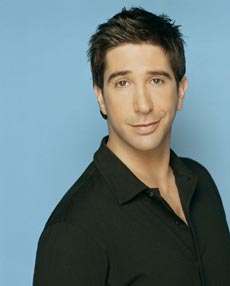
Ross Geller - Friends
Here's a fun game, when you imagine Ross from Friends, what is the first word that comes to mind to describe him? Roughly 95% of you will think of the word "dork", while the other 5% will have thought of the word "dorkily". Unfortunately "dorkily" is an adverb, and while it's a good way to describe how Ross behaves in every scene, you're disqualified. Sorry. Anyway, Ross is awkward, nerdy, and once tried to learn the bagpipes. His only friends are a moronic pretty-boy, an attention craving smart-ass, a bossy loudmouth, an eccentric weirdo, and a spoiled bitch ... and still Ross is the least cool member of the group. He achieves astounding levels of lame.


4) The Wacky Alien

Considering that most sitcoms are based around various family units, you wouldn't think that aliens would appear as often as they do. However, comedy is often derived from a character being placed in an unfamiliar environment and then acting stupid or silly (eg. Balki from Perfect Strangers), so an alien living with humans is an ideal exaggeration of that idea.

Roger Smith - American Dad
Roger looks kind of like a cross between a lightbulb and a grey sock. He's got a bulbous head and stubby E.T. legs, and (like all Seth MacFarlane characters) a vast knowledge of popular culture.  Since he's an alien fugitive from Area 51 living with a human family, you'd think he'd be the weirdest member, but no ... there's also a talking fish implanted with the brain of an East German ski jumper.


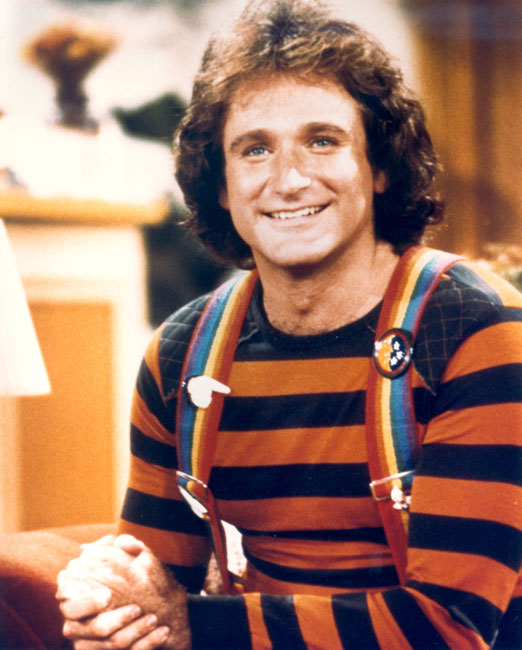
Mork - Mork and Mindy
Okay, I'm going to admit it. I've never actually seen an episode of Mork and Mindy. But it's a sitcom about an alien named Mork from a planet called Ork (great writing) and he's played by Robin effin' Williams. I'd be a fool not to include this. The rainbow suspenders may be weird, the egg spaceship might be weirder, but the fact that this is a spin off from Happy Days is weirdest of all.


Dr. Zoidberg - Futurama
Definitely one of the funniest characters in Futurama, the good doctor for Planet Express is a Jewish lobster in a lab coat. Like any good sitcom alien he is usually confused by human customs and desperate for attention. Even though he's a terrible doctor, and an emotional loner, you can't help but love this guy.


The Solomons - 3rd Rock From the Sun
What's better than an alien living on Earth to observe human life? How about FOUR aliens living on Earth. Yep, the Solomons aren't just your average Tom, Dick, and Harry...  and Sally, they are actually an extraterrestrial research expedition disguised as an American family. 3rd Rock is definitely one of my favourite sitcoms ever. The dynamic between the characters is hilarious as they experience everything for the first time, from sneezing to sex. It's worth watching for John Lithgow, the High Commander and now physics professor, doing what he does best ... yelling and being dramatic.


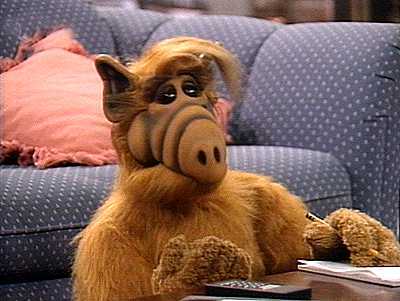
ALF - ALF
One day a spaceship crashed into the garage of The Tanners and immediately a family was burdened with keeping an alien named Gordon Shumway a secret in their home. Gordon, nicknamed ALF (which stands for Extra-Terrestrial, I believe), is an obnoxious, sarcastic, gluttonous troublemaker who is constantly putting the Tanners at risk of being invaded by the US military. And you know what? He doesn't give a shit. Not one single shit. He just wants to laugh, belch, and eat a box of kittens in front of your kids.


3) The Wisecracking Butler or Maid
The sarcastic servant character is a classic in movie and television history. From The Jetsons to Arthur, there's just nothing better than a butler or maid who mouths off when you'd expect them to be silent and obedient. That's essentially why it works so well in comedy. Take an expectation and flip it upside-down. Here are some great examples of the servant class being lippy with their employers.

Berta - Two and a Half Men
While many sarcastic maids and butlers might make a sly remark under their breath, Berta has no restraint. She will make shockingly rude and insulting comments right to your face and then threaten to pummel you. As a housekeeper, she kind of sucks. She'll show up late, get high on the job, or you may find her passed out on the sofa with a hangover. But she'll never get fired because she's an intimidating bully. It's the perfect system.


Niles - The Nanny
This guy always cracked me up. Niles is a sarcastic, manipulative, but loyal butler for the Sheffield household. Being the eyes and ears on the home, Niles is constantly gathering information he can use to help Fran, or torment the "villain" of the show, C.C.. The best part of any episode was when Niles faced off with C.C. as they tore each other new ones. Goddamn, they hated each other ... or did they?


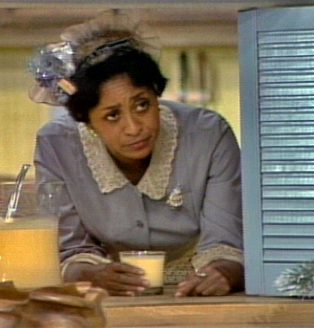
Florence Johnston - The Jeffersons 
An important element of this character trope is sass, and Florence had sass. Much like Berta, Florence will speak her mind openly even though she's doing a half-assed job as a maid. She has no trouble talking back to her boss, and since that's what we all dream of in life, she naturally became a fan favourite of the show.


Tony Micelli - Who's the Boss? 
Wait a minute, let me get this straight. Angela is a career woman who hired Tony to be her live-in housekeeper? A dude is a maid for a woman? What kind of bizarro world shit is this? This is what millions of viewers screamed at their televisions back in primitive 1984. Everybody desperately wanted to know who the boss was and why. Anyway, Tony was always cracking wise at home. I suspect it was mostly nervous tension over being sexually attracted to his boss/roommate.


Geoffrey - Fresh Prince of Belair
When I think of butlers making sly remarks, I think Geoffrey. He would always carry himself with an air of dignity as he went about his duties, but no one was safe from his scathing wit. He had one-liners for any and every situation. If you were overweight, spoiled, or stupid Geoffrey could put you in your place, and sarcasm is always more potent when delivered with an English accent.


2) The Weird Neighbour

What sitcom would be complete without a neighbour popping in unannounced time and time again? Sometimes they are there to be a comedic annoyance, other times just to be strange. These characters often have a signature catchphrase or entrance.

Ned Flanders - The Simpsons
Ned is actually a great combination of "The Weird Neighbour" and "The Lame Square", but I figured he'd be better suited to this section because he's so iconic as the annoying neighbour to the Simpsons. He's highly religious and moral, a devoted husband and father, and excessively good-natured and kind. In a strange way, it makes more sense to see Homer as "The Weird Neighbour" to Ned. In any other sitcom Ned would be the straight-laced guy being driven crazy by his scheming idiot friend next door. Instead, Ned is loathed by Homer for being so different. Since Ned is one of the only "normal" guys in a town overflowing with odd characters, he's in the minority and branded as "weird".

Wilson - Home Improvement
Wilson is a strange neighbour for several reasons: he has roughly a hundred thousand hobbies and only participates in each one once, he has nearly unlimited knowledge of obscure history and cultures, and he may or may not have a face. Many sitcoms fall into predictable patterns.  Every episode of Full House will have "the serious discussion moment" and every episode of Home Improvement will have Tim heading out into the backyard and getting advice from Wilson through a fence. It's comforting to know that no matter how difficult family life can get, you can always count on some sage advice from an old guy doing ancient Aztec bean dances in his backyard, who will relate the dance to how you need to stop being so fucking selfish around your wife.

Rose - Two and a Half Men
What? Another character from Two and a Half Men? That show isn't even that good. I agree, it's crass and stupid, but it is also a treasure trove of stereotypical sitcom character types. I swear everyone on the show fits into a mould you've seen a million times before. Besides the ones I've already mentioned it has "The Bitchy Ex", "The Stress-inducing Mother", and "The Brainless Hungry Teenager" who used to be the "Adorable Smart Aleck Child".

Rose made the list because she's deranged. After a one night stand with Charlie she became obsessed with him and stalked him constantly. She is always lurking around his home, sneaking in, and trying to implant herself within the family. There is a love/hate relationship between Rose and Charlie, though mostly Charlie's love seems to be the result of her manipulation. Sometimes she reveals herself as being highly intelligent and caring. Other times she's a dangerous weirdo who may steal from, or cause physical harm to those around her. Ultimately she's a complete psycho, since it's essentially understood that Rose killed Charlie by shoving him in front of a train.

Steve Urkel - Family Matters
Ah, the Urk Man. There's no possible way to make a list like this and not mention his name. He's got several catchphrases, his own dance, and he's a constant annoyance to the Winslows. It seems to be Steve's personal mission to give Carl Winslow a mental breakdown. Not only has he caused severe damage to Carl's home and peace of mind with his endless buffoonery, Steve is also obsessed with Carl's daughter, Laura. But Carl doesn't need this shit, not after Nakatomi Plaza.

In later seasons Family Matters turned into Urkel's Screwy Invention Hour, with more and more ludicrous stories with Steve inventing personality altering machines, robots, time machines, and all sorts of crazy shit. In the end he was better suited as just the annoying nerdy kid you couldn't keep out of your home.

Cosmo Kramer - Seinfeld
Look no further, this is the quintessential weird neighbour. Kramer has the whole package. Strange, goofy appearance? Check. Constantly barging in uninvited? Check. Always involved in one stupid scheme after another? Check. Clumsy? Annoying? Tactless? Check, check, and check. Kramer is known for his trademark entrances and hair that looks like he jammed his tongue in an outlet. His three "friends" are all selfish social rejects in their own right, but still Cosmo takes the cake. If you ever needed someone to eat your food and borrow your stuff without asking, or say the worst thing at the worst moment, or give you awful advice, just check across the hall.


1) The Fat / Ignorant Husband and The Wife with an Annoying Voice

To cap off this mega-list, I present to you one of the most common sitcom character combos: a bloated dolt of a husband and a screechy wife. It's been around since the beginning of television with shows like The Honeymooners and I Love Lucy, and it's continued ever since. Yes, the public can't get enough of spouses bombarding each other with stupidity and high pitched nagging.

Al and Peggy Bundy - Married... with Children
The Bundy's are a classic dysfunctional sitcom family. Al is a dopey slob of a husband who loves to laze about on the couch with his hand tucked in this pants, and Peggy is a whiny nag of a wife who just wants to buy shit and insult her husband. Everything about the show is exaggerated and cartoonish, from Al's behaviour to Peggy's hair. If you don't remember the show well, say the word "duh" in a drawn out dim-witted voice and you'll have captured the essence of Al Bundy. Then listen to Leela from any episode of Futurama, and now you know the voice for Peggy.

Peter and Lois Griffin - Family Guy
This show owes a lot to the other entries in the list, since it's essentially an extreme exaggeration of, and tribute to, famous sitcom characters that have come before. Peter is an obese moron devoid of common sense. His wife, Lois, is a nagging wife, but she has every right to be since her husband is an obnoxious ass. The show has compared her voice to Fran Drescher and I'd say that's pretty accurate.

So the family is made up of a fat, stupid husband married to a beautiful wife with an unfortunate voice. They have three kids and a dog. The oldest child is a son, the second is an unpopular daughter, and finally an intelligent baby. Now that I think about it, that type of family sounds familiar. I can't think of where I've seen something like it before, but I'm sure it will come to me...

Dan and Roseanne Conner - Roseanne
Whenever I think of the stereotypical American family, I think of the Connors. An obese working-class family with lots of kids, living from paycheque to paycheque. Roseanne was the bossy nasal voice of the family, with her big-boned schlub of a husband, Dan, at her side.

What made the show successful was that it was relatable and it didn't shy away from difficult subjects. In fact, the show's final episode is one of the darkest finales I've ever seen. Unlike the Bundy's and others like them, the Conners felt like a real family struggling with real problems. Dan and Roseanne may have been flawed characters -  overweight, annoying, and foolish at times - but they were grounded in a reality the viewer could appreciate.

Homer and Marge Simpson - The Simpsons
I don't really know what I can say about characters this famous and so ingrained in our culture, that you don't already have burned into your brains. The Simpsons have been on the air since the late 80's for crying out loud and they still make new episodes. But in case you've been on Mars for the last 23 years, in a cave, with your eyes shut and your fingers in your ears, I'll explain.

Homer is the buffoonish and gluttonous father. He's lazy, careless, and dumb. Marge is the nagging, overly concerned mother. Her voice sounds like Kathleen Turner after gargling hot coals. Together they make the perfect couple. Homer does something stupid, and Marge growls at him in a displeased manner. If you're still confused, just imagine a slightly toned down version of Family Guy with less cutaways.

Archie and Edith Bunker - All in the Family
These two are iconic sitcom figures. Hell, even their chairs are recognizable. Archie is the loud stubborn head of the household with strong opinions about everything. He's a bigot, a racist, and basically prejudiced against anything outside himself, and all these things are fuelled by ignorance. By contrast, Edith is kind and open-minded, and a very obedient, hardworking wife and mother. Her voice ... how can I put this? ... is earsplitting. She makes Monty Python's female characters sound like Norah Jones.

What makes the characters special is that they are still likeable even with the unfounded hate and high pitched tones that put dogs into comas. The best moments are when Archie and Edith have revelations. Many times in the heat of a rant, Archie would suddenly realize the hypocrisy of the point he was making and be at a loss for words. In other moments when Edith takes a stand on a issue she'll speak in a more controlled, serious tone and has some of the wisest things to say. In these moments we feel there is hope for the characters, as we see them become stronger and smarter.

Archie and Edith may be familiar archetypes we've seen on televisions for decades, but they stand out for having more substance to their personalities. The immediate impression is that he's an ignorant and hateful husband, and she's a shrill and naive wife. However, the more you watch, the more you see their true personalities shine through, and that makes for a compelling and entertaining show.

Sunday, April 8, 2012

The Craziest Things about the Back to the Future Trilogy

Instead of listing the best or the worst of something, I thought I would explore one of my favourite movie trilogies. I've heard people describe Back to the Future as the best movie about time travel and others call it the worst movie about time travel, and you know what? They're both right.

I can't count how many times I've watched these films, but no matter how many times I do, I always come away with something new to think about. Back to the Future is unfiltered entertainment, and the flaws and plot holes are all part of that fun. You'll enjoy yourself while watching and still have plenty of crazy inexplicable stuff to discuss afterwards. So, let's check out some of the more interesting aspects of the films to contemplate. There's a lot to say ... you've been warned.

5. Delicate Space Time Continuum, My Ass!
Over and over we hear Doc Brown rant about the space time continuum and how even the slightest change of past events could have major repercussions on the future. But the truth is that Doc doesn't really seem all that concerned.

The first big indication of that is in Part I when Doc reads Marty's note about the future. At first he tears it up claiming it's dangerous to know what will happen, and then later tapes the pieces back together and reads it because ... "what the hell". Way to stick to your guns, Emmett.

In Part II, while in 2015, Doc and Marty have to find Jennifer before she may encounter her older self ... because it may destroy the universe! I'm surprised that didn't cross Doc's mind before he ran up to two teenagers in a driveway, yelling at them like a lunatic about their non-existent kids, and whisking them away in a flying time machine in  broad daylight. Wasn't this the same guy who used to be super worried about knowing too much about your future?

Does telling Marty and Jennifer that they will get married and have kids affect the possibility of that outcome? If not, why doesn't he just give them a heads up about what will happen to their kids so they can prevent it? Wouldn't it have been easier to leave Jennifer behind? Or not tell her? Instead Doc seems to be frantic about getting them in the time machine and to the future. For someone who owns a time machine, Doc sure is in a damn hurry all the time.

4. Biff Tannen: Super Villain 
Biff Tannen has got to be one of my favourite antagonists in all of cinema. What's interesting about his character is how over the course of the trilogy we discover more and more what an evil guy he is.

Think about it. The first time we meet Biff we find that out that he's an alcoholic, a mooch, and a liar. He's treating the McFly family like shit from scene one. When Marty goes back to 1955 we see that Biff has been bullying George McFly his whole life, and he's an all around hot tempered prick. By the finale of the first film he's attempted to rape Marty's mother.

Since the first movie already took Biff from jerk to rapist, I'd say we've clearly established him as a terrible person. But there's more! In Part II when Biff's character is given unlimited money and power he basically ruins the entire town and leaves it a degenerate wasteland. He's abusive, adulterous, engages in illegal activity, and murders people! In fact we see two different versions of Biff trying to kill Marty in the same film.

But that's not all. Not only is Biff a horrible person in every sense, we discover that his descendants and ancestors are all psychos and assholes too. It's like Biff is constantly growing more and more evil to the point where it's eternal.

Since we're focusing on Biff, I really have to point out how crazy it is to see his character working for the McFly family at the end of Part I. Why exactly did George McFly decide the perfect person to hire to clean his car would be the man who once tried to rape his wife? I mean, honestly, at what point do you break ties with this fucker?

3. Tracking the Time Machine
Fact: The DeLorean is still the coolest time machine in cinema history. Don't deny it.

For fun I drew up a timeline for the trilogy depicting all the trips the DeLorean makes and who made them. Please print it out, laminate it, and carry it around for your reference. The time machine is mostly powered by plutonium or garbage for most of the trips it makes, but also powered once by train, and twice by lightning. I should note that both of those times were from the same lightning storm.

Throughout the trilogy there are 13 clear trips the DeLorean makes, however, there may be more since we don't know everything Doc Brown did while in the future before coming back to warn Marty of his future asshole kids. By my calculations, with all the trips made, the time machine passed through (or over?) 570+ years. Interestingly, the first trip is the shortest jump (1 minute forward) and the last trip is the longest jump (100 years forward).

Also, during Part II there are 4 versions of the DeLorean existing in Hill Valley 1955 all at once: 1) The one in Doc's workshop before Marty returns to 1985 via clock tower lightning. 2) The one Old Biff is using to give his younger self the Almanac. 3) The one hidden behind a billboard while Doc and Marty try to retrieve the Almanac. 4) The one buried in the mine left by Doc trapped in 1885. There are also at least 2 versions of the DeLorean in 2015, but we only see one of them.

2. Doc's Timeline: A Series of Unfortunate Events
One of my favourite things to consider when looking back on the trilogy is the individual timelines of the characters. Because we're viewing the events primarily from Marty's perspective, we might not imagine the absurd chain of events for other characters. Specifically I find Doc Brown's perspective pretty crazy. Here's how his life played out chronologically:

So Doc is living alone in Hill Valley in 1955 toiling away on failed invention after failed invention. One day he slips in the bathroom, bangs his head, and is struck with the idea for the flux capacitor, which makes time travel possible. The very same day some teenager shows up at his door claiming to be from the future travelling in a time machine built by his future self. Already that's pretty screwy.

So he spends the next many days with this kid (that he will one day become friends with) trying to find a way to power the time machine (that he will one day invent). Doc nearly kills himself climbing the clock tower during a thunderstorm trying to rig up a system to harness a lightning bolt. At the last minute he succeeds, the DeLorean is powered, and Marty disappears into the future.

A few seconds later another Marty runs up to him and frantically needs his help again. Doc now needs to go excavate another version of his time machine out of a mine in order to send Second Marty into the past to rescue his future self who is trapped in the old west. Oh yeah, and while retrieving the time machine, Doc stumbles upon his own grave.

But that's not all. Doc sends the Second Marty to 1885 and then finally gets to move on with his life. He spend the next 30 years building the time machine that he's already encountered twice. He becomes friends with Original Marty, and on the night he tests his invention for the first time, Libyans riddle him with bullets and Marty drives off with his car for a third goddamn time.

For me, I'm just tickled by the mind-bending bullshit Doc has to endure before even getting to try out his machine for the first time. We don't even get to see him take his first trip through time, which must have been a significant moment of triumph for his character. Nope. Instead we spend all our time watching him nearly get killed while helping a stranger.

1. Paradoxes Galore
Oh man, where to begin?


First of all, I would say the biggest paradox has to be the entire conflict of the first movie. Marty goes back in time to 1955, accidentally prevents his parents from meeting and then has to get them together, or else they never fall in love, never get married, never have kids, and *gasp* Marty wouldn't exist. But if we continue that chain of events, if Marty doesn't exist, then there is no Marty to travel back in time to interfere with his parents lives, and so they do meet, do fall in love, get married and have kids, and *gasp* Marty would exist. It's the ol' Grandfather Paradox where a person's actions are creating a never-ending loop of contradiction.


Despite the impossibility of interfering with his parents past, Marty does get them back together. As a result the circumstances in which George and Lorraine meet and fall in love are quite different and so when Marty returns to his life in 1985, his parents are now different people; they're healthier, happier, more confident, and successful. But why doesn't that make Marty not exist?!! Sure, the parents still end up together, but why would they have the exact same children in the exact same way? Why would they still live in the exact same house?!! Marty's siblings are different now as well, but why hasn't Marty changed in the process? Shouldn't he also have a new personality, or suddenly be flooded with memories of a different version of his childhood? For some reason everything changes except Marty. I'm not even going to delve into the fact that his parents don't seem to notice a similarity between Marty and that Calvin Klein fellow who got them together years ago.


While in 2015, when Doc and Marty are off trying to rescue Jennifer, Old Biff sneaks away with the time machine to alter his past. He gives his younger self the Almanac and when he returns to 2015 we see him doubling over in pain, the same way Marty did on stage as he began to fade from existence. Because he's changed his past Old Biff is dying, or "disappearing from existence". In a deleted scene we can actually see him collapse and fade away. The big issue I have with this is ... why doesn't the world start changing around him because of the altered history? When Doc, Marty, and Jennifer return to 1985 the world has changed and the town is a wasteland of crime. If  Biff created an alternate 1985, where is the alternate 2015?

And of course, like before, if Biff changes history and then doesn't exist in 2015, then how can he go back in time to change history? Also, in this alternate timeline we find out that Doc was committed to a mental institution. But if Doc is locked away, then he doesn't get to build a time machine and none of the events of the films would happen, including Old Biff's trip with the almanac.

Several times in the trilogy we see objects changing as the past is changed: Marty's family photo, the "You're Fired" fax paper, the picture of Doc's grave, and different newspaper articles. However, most of the time it doesn't make any sense. We see the fax fade away to a blank sheet of paper, but why wouldn't it fade away entirely? In the altered future, why would Jennifer pick up a blank piece of paper? Or when the newspaper articles change, they always change into a new article about the same person instead of, you know, some random article. And if Doc never gets shot in 1885, then there would be no grave and no reason to take a picture.

But there's more! Who the fuck actually wrote "Johnny B Goode"? Marty learned the song from Chuck Berry, and apparently Chuck Berry memorized it over the telephone as Marty played it. In the same line of thinking, where did the design for the time machine come from? Doc invented and built it, but that was after he saw the finished product and examined it. He may have come up with the flux capacitor alone, but using a DeLorean was probably the result of knowing that he ends up using a DeLorean. It's another paradox where an idea has no clear source.

In Part III Doc and Marty discover Emmett Brown's grave that clearly explains that Doc is shot and killed by 'Mad Dog' Tannen over a dispute about money. Shouldn't the discovery of this grave immediately change the past? There's are two Doc's: Young Doc in 1955, and Old Doc in 1885. If Young Doc learns about his death, shouldn't Old Doc now know about it too? Wouldn't he have the memory of finding his own grave more than 30 years ago? If I knew who was going to murder me, when, and why ... I'd probably do something to avoid it.

Ow! My brain hurts. There are still plenty more of these types of paradoxes, but I think you get the point. The trilogy is filled with plot holes and paradoxes, but I feel most of them don't become apparent until additional viewings, and even then they don't really hamper your enjoyment of the films. That fact is, these movies are hilarious and exciting, and filled with wonderful characters and a great story, even if the story doesn't make complete sense all the time. Like Doc Brown, it's best to just go with it and worry about the details later.

Thursday, February 9, 2012

Post-script: Five VG Music Covers That Shouldn't Be

Like fleshy homunculi writhing in agony on a necromancer's altar, here are some renditions of game music that never should have been.

5. Bloody Tears Cannibalized by Rappers


4. Mario Theme on Deranged Cat Piano


3. Robo's Theme (Chrono Trigger) in Mario Paint


2. Metal Gear Solid 2 Theme on Kazoo and... Torso?


1. Chocobo Theme on Cockatiel


Unsurprisingly, the cockatiel is the best of the bunch, and even it is clearly ashamed.

Thursday, February 2, 2012

Five VG Music Covers That Have a Life of Their Own

The Internets are flush with recordings of people stumbling through Castlevania's Bloody Tears on a keyboard in their basement, or playing the Super Mario Bros. theme on a nose-flute. But if you wade through the umpteen videos of shredding Mega Man, or the Zelda overture drummed out on Mongolian sheep bladders just for the sake of it, you can find some music which really resonates.

There are plenty of lists of the best covers of game music, but I wanted to compile my favourite examples of when a track is given new life through the replay, as it were.

5. Windwaker Unplugged (FreddeGredde)


FreddeGredde's cover of the Windwaker theme has certainly made its (deserving) rounds on lists like this. That said, it's three and a half-million views worth of awesome. The accordion and the vocal layering really add some warmth to an already great piece of music.


4. Lufia: Curse of the Sinistrals/Estpolis - Final Battle

(Original)

Lufia 2 (SNES) was a terrific, classic-style RPG. They remade it for the DS in 2009, and the OST cranked the music up to 11. This one is kind of a cheat, since it's a proper Nintendo remake, but it can't be helped. This is an epic track, in the proper, definitive sense of the word. The drums, trumpet, and strings give it an intensity which (obviously) just couldn't be achieved on the SNES. I dare you to listen to this and not want to save the world, Lufia fan or not.


3. Chrono Cross - Dream of the Shore Near Another World (SongeLeReveur & Marcpapeghin)

(Original)


Chrono Cross (PS) had a gorgeous soundtrack which would be difficult to improve on. These guys start with Dream of the Shore, and really take it somewhere else with the new and distinctive instruments (although I have some issues with the tempo of the uke at the beginning). I think the end product sounds more at home in a Wild ARMs game, which is certainly a compliment. It takes a dreamy overworld theme and turns in into a new, almost standalone composition.


2. Final Fantasy Main Theme Remix (Hyadain)

This was the reason why I wanted to make this list in the first place. Kenichi Maeyamada aka Hyadain, is a Japanese composer whose YouTube remixes of game music are quite unique in that he sings most of them (his rendition of Cyan's Theme and Ultros Boogie are also interesting). His remixes are skillful and fun homages to classic game music. What we have here is essentially the Final Fantasy national anthem, and I love that such a thing exists.


1. Chrono Trigger - Peaceful Days (lonlonjp)

(Original)

I just couldn't put the Hyadain track at number one, because of how much I love this. Of all lonlonjp's excellent Chrono Trigger guitar arrangements (Frog's Theme in particular), I think that this one stands out because of how perfectly suited the original track is for the solo guitar. He absolutely nails the simple beauty of the song. Fans of Chrono Trigger will be immediately lost in two minutes of nostalgic bliss, and anyone else can instantly understand why Yasunori Mitsuda named his original track “Peaceful Days.”